Our team brings specialist knowledge to the care and creation of naturalistic and semi-managed landscapes, from intimate copses to expansive meadows.
We carry out:
Our approach balances horticultural precision with ecological awareness, ensuring that every planting scheme is not only beautiful but resilient, wildlife-friendly, and future-proof.
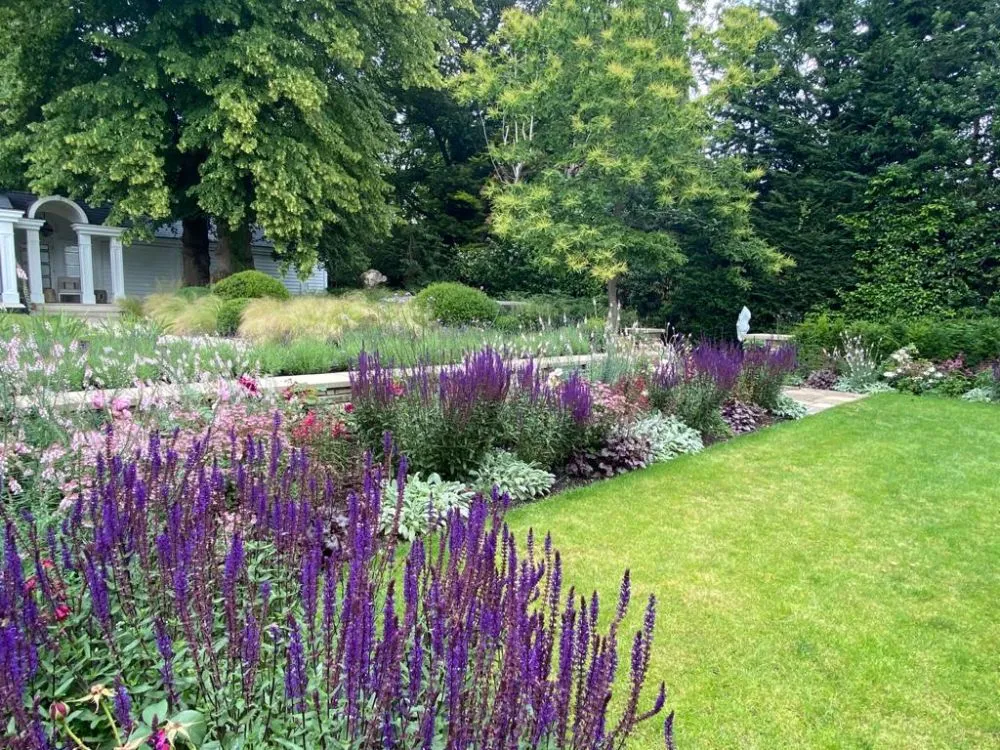
Meadows have been a feature of the English landscape for centuries and hugely important part of Britain’s ecosystem. These diverse wildflower meadows can contain upto 40 species in one square metre, including: bees and beetles, butterflies and moths, spiders, reptiles, amphibians, bats and birds.
Since the 1930s, over 97 per cent of our wildflower meadows have been lost. The habitat now makes up just 1 per cent of the UK with larger garden owners now looking to introduce wild flower meadows once again.
Wildflower meadows require an annual maintenance programme to allow the more desirable species to flourish and to reduce the vigour of the more rampant species. Meadow management requires skill and experience, to ensure the best time for hay to be cut so as to ensure that the majority of wildflower seeds have ripened and will be left in the meadow.